Fruit, vegetables and bread, now available in store and online

The Complete Guide to Steak Cuts: Choosing, Flavour & Portioning
Learn the key steak cuts, flavour profiles, portion sizes, and cooking temperatures to choose and cook the perfect steak.
FOOD GUIDES
Browns of Haborne
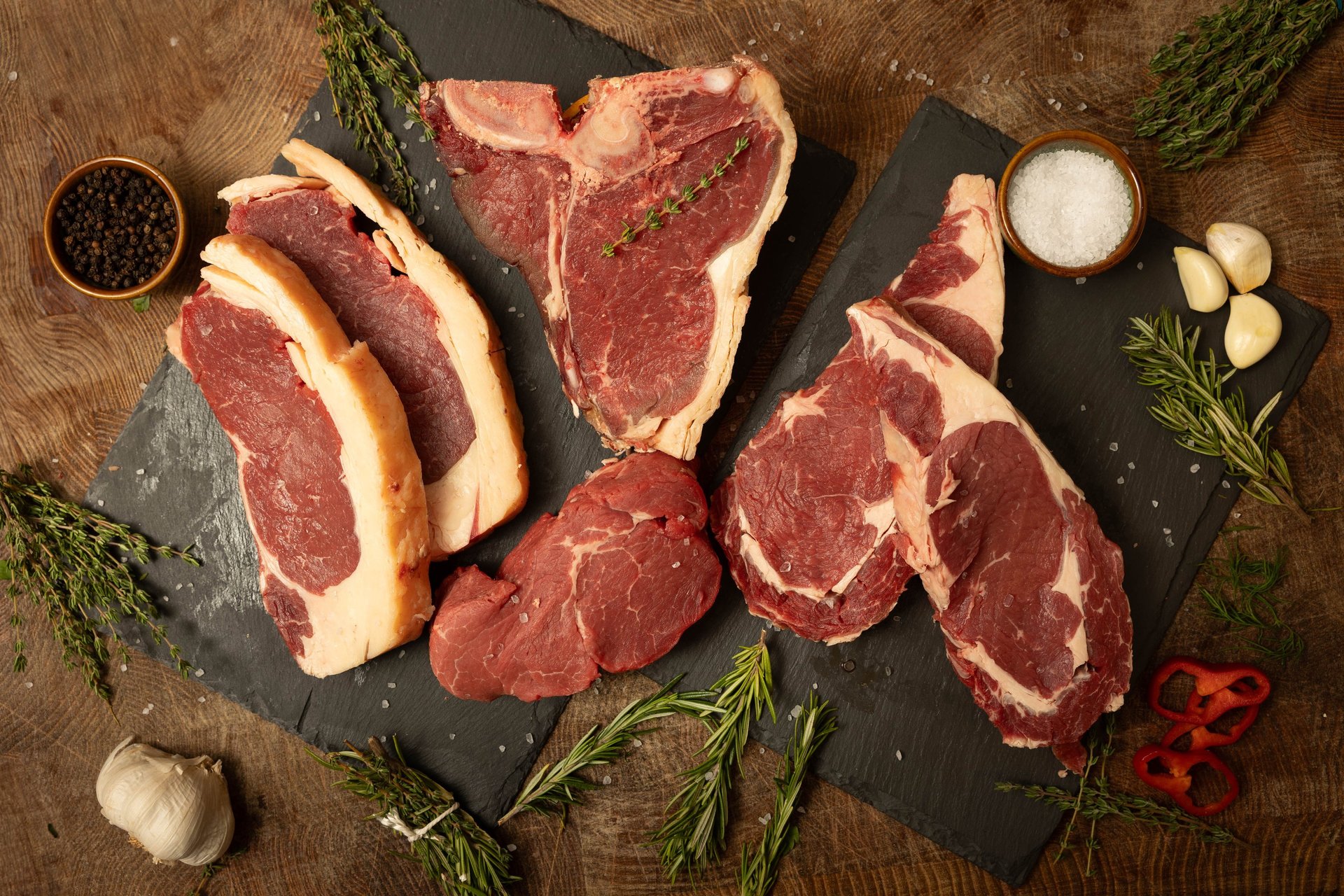
Choosing the right steak is not just about price or appearance; it is about understanding flavour, texture, and how each cut performs when cooked.
At Browns of Harborne, we guide customers through these choices every day. Whether you are cooking a quick midweek meal or preparing something special to share, knowing your cuts makes all the difference to the final result.
This guide walks through the most popular steaks, how they differ, and how to choose the right one for your needs.
Introduction
Ribeye
Sirloin
Description: Cut from the rib section, known for its generous marbling.
Flavour & Texture: Rich, full flavour. Juicy due to fat content. Tender with a slight bite
Best For: Pan frying. Grilling. High-heat cooking
Description: A classic cut with a strip of fat along one side.
Flavour & Texture: Balanced flavour, slightly firmer than ribeye, leaner but still satisfying.
Best For: Everyday steaks, pan cooking, grilling.
Thickness
Thickness plays a critical role in how well a steak cooks. As a general rule, steaks should be cut between 1 and 1.5 inches thick, as this allows the outside to develop a proper crust while the inside reaches the desired level of doneness from rare through to medium well. Thinner steaks tend to overcook quickly, leaving little control over the final result, while thicker cuts give you far greater consistency and a better eating experience.
When choosing quality meat, there are a few simple indicators to look for. Good beef should have a rich, deep red colour, not dull or grey. Marbling, which is the fine distribution of fat within the meat, is key to flavour and juiciness, with more marbling generally resulting in a richer and more tender steak. The fat itself should appear creamy or slightly off-white rather than yellow, and the meat should look fresh, firm, and well prepared. These small details make a noticeable difference once cooked.
Choosing Quality Meat
Choosing The Cut: Classic Cuts
Fillet
Rump
Description: A hardworking cut with strong flavour.
Flavour & Texture: Deep, beefy flavour, firmer texture, slightly more chew than premium cuts.
Best For: Grilling, high heat cooking, slicing after resting.
Description: The most tender cut, taken from the loin.
Flavour & Texture: Extremely tender, lean, more subtle flavour.
Best For: Special occasions, precise cooking, pan frying.
Choosing The Cut: Sharing Steaks
Côte de Boeuf
T-Bone
Description: A thick-cut rib steak on the bone, prepared for sharing.
Flavour & Texture: Deep, rich flavour, tender, juicy, excellent fat content.
Best For: Sharing, roasting, grilling, reverse searing.
Description: A combination of fillet and sirloin separated by a central bone.
Flavour & Texture: Mix of tenderness from the fillet, and flavour from the sirloin, balanced and versatile.
Best For: Sharing, grilling, high heat cooking.
Understanding Flavour
The flavour of a steak is influenced by fat content, muscle use, and ageing. Fat content plays a major role, with higher levels of marbling creating a richer, juicier, and more indulgent flavour, while leaner cuts offer a cleaner, more delicate taste. Muscle use also affects the result, with less-used muscles producing more tender cuts, and harder working muscles delivering deeper flavour with a firmer texture. Ageing further develops the character of the meat, with dry-aged beef producing a more complex and concentrated flavour, and wet-aged beef offering a fresher, slightly milder profile.
Portioning Guide
Choosing the right portion is just as important as choosing the cut itself. For individual steaks, lighter portions typically sit between 180 and 220 g, standard portions range from 220 to 300 g, and larger, more substantial servings can reach 300 to 400 g. Sharing cuts vary depending on appetite, with 500 to 700 g suitable for two lighter appetites, 800 g to 1 kg working well for two standard portions, and larger cuts comfortably serving two to three people. Bone-in steaks should always be selected slightly larger, as part of the weight comes from the bone rather than the edible meat.
How to Choose the Right Steak
Selecting the right steak depends on what you value most in the final result. For maximum flavour, ribeye or rump are strong choices, offering richness and depth, while fillet provides the highest level of tenderness with a more refined and delicate profile. Sirloin sits between the two, offering a balanced combination of flavour and texture. Cooking method should also be considered, with fillet and sirloin well suited to pan cooking, ribeye and rump performing best on a grill or barbecue, and larger bone-in cuts ideal for sharing and slower, more controlled cooking. Matching the cut to the occasion ensures a better overall experience.
Steak Doneness Guide
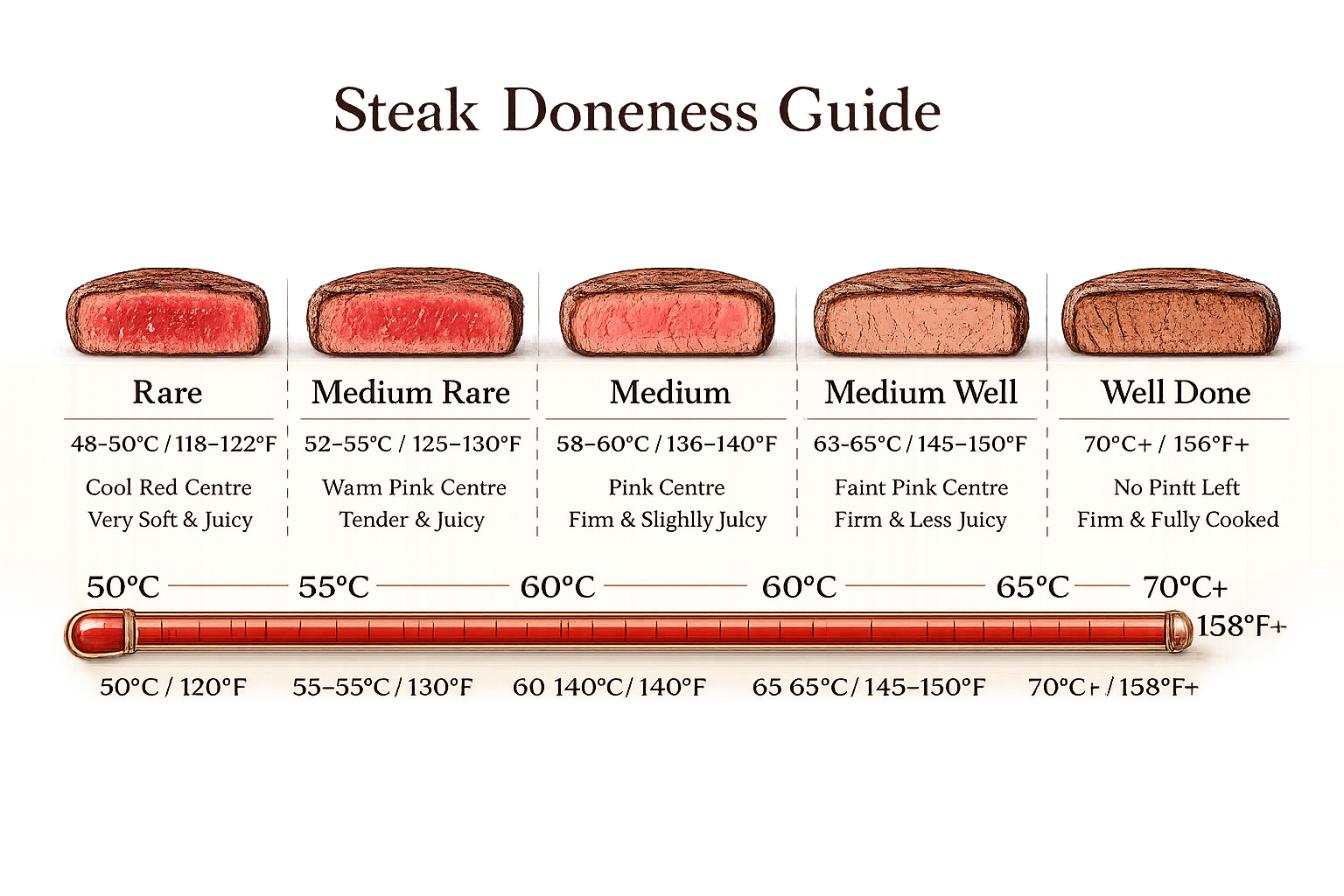
A simple guide to steak doneness, showing the key temperature ranges and how each level affects texture, colour, and overall eating quality.
Final Thoughts
There is no single best steak, only the right one for the occasion. Understanding the differences between cuts, flavour, portion sizes, and doneness allows you to choose with confidence and achieve consistent results. Taking the time to select the right cut and cook it properly makes a noticeable difference to both flavour and overall experience.
This recipe is for general information only. Browns of Harborne Limited accepts no liability for any outcomes, including injury or food safety issues. See our Terms & Conditions for full details.
Phone
0121 427 1252


Visit
6 Northfield Road, Harborne, B17 0SS
© 2026. All rights reserved. Browns of Harborne Limited. CRN: 14878337


Web Design by: